



Sustainability has become a major focus for businesses across industries, especially when it comes to packaging choices. Paper bags are often promoted as an eco-friendly alternative to plastic, but the reality is more complex than it seems. For companies looking to make responsible decisions, it is important to understand whether paper bags are truly environmentally friendly or simply perceived that way.
While paper packaging offers several environmental advantages, its overall impact depends on factors such as production methods, usage patterns, and disposal processes. Businesses that evaluate these aspects carefully can make more informed and effective packaging decisions.
What Makes Paper Bags “Eco-Friendly”?
Paper bags are generally considered eco-friendly because they are made from renewable resources and are biodegradable. Unlike plastic, paper decomposes naturally over time, reducing long-term environmental pollution.
Another key factor is recyclability. Paper can be recycled multiple times, which helps reduce waste and conserve resources. Many businesses sourcing bulk paper bags for retail packaging prioritize recyclability as part of their sustainability strategy.
However, being recyclable does not automatically mean a product is environmentally optimal. The full lifecycle of paper bags must be considered to understand their true impact.
Environmental Impact of Paper Bag Production
The production of paper bags involves several resource-intensive processes. Manufacturing paper requires water, energy, and raw materials such as wood pulp. In some cases, large-scale production can contribute to deforestation if not managed responsibly.
Compared to plastic, paper production typically consumes more energy and water. This means that while paper bags may have advantages at the disposal stage, their production footprint can be higher.
Businesses often balance these factors by combining paper packaging with alternatives like non woven reusable shopping bags, which offer longer lifespans and reduce the need for frequent replacement.
Reusability vs Single-Use Packaging
One of the most important factors in determining whether paper bags are eco-friendly is how they are used. Single-use paper bags have a limited environmental advantage, especially if they are discarded after one use.
Reusability significantly improves sustainability. When paper bags are used multiple times, their overall environmental impact decreases. However, they are generally less durable than reusable alternatives.
For this reason, many companies integrate durable reusable shopping bags for businesses into their packaging strategy to reduce waste and improve long-term sustainability.
Paper Bags vs Plastic Bags: Which Is Better?
The debate between paper and plastic bags is ongoing, and both options have their pros and cons.
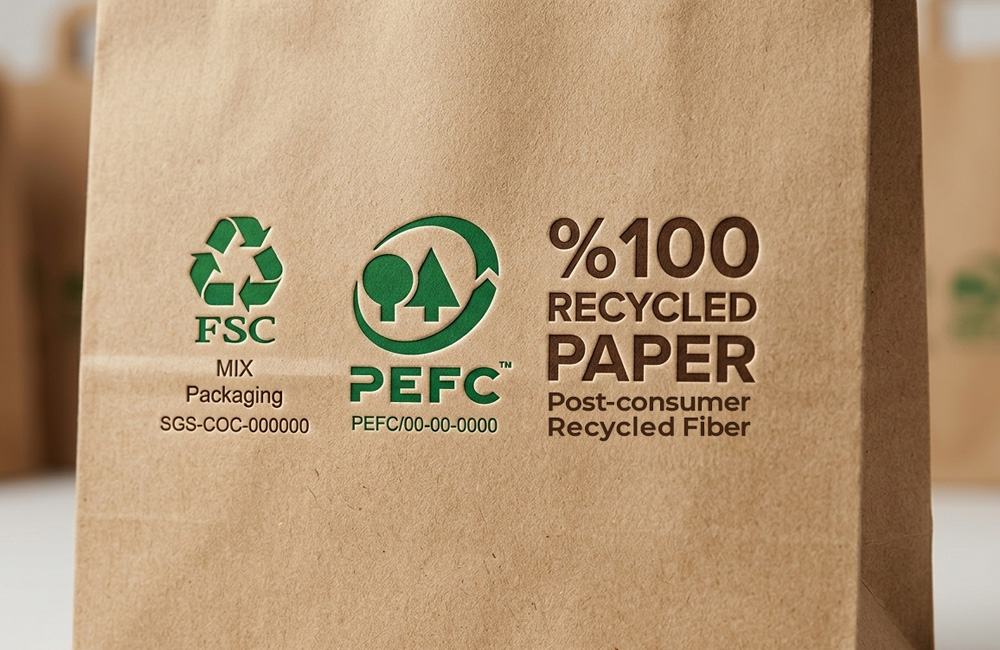
Paper bags are biodegradable and easier to recycle, making them more environmentally friendly in terms of waste management. Plastic bags, on the other hand, require fewer resources to produce but create long-term environmental pollution due to their non-biodegradable nature.
From a business perspective, the decision often depends on usage patterns. If paper bags are reused and recycled properly, they can be a better option. However, if they are used only once, their environmental advantage may be reduced.
Companies working with a reusable shopping bags supplier USA often adopt a hybrid approach, combining different materials to optimize both cost and sustainability.
The Role of Recycling and Disposal
Proper disposal plays a critical role in determining the environmental impact of paper bags. Recycling infrastructure varies by region, and not all paper bags are recycled effectively.
Contaminated paper bags, especially those used in food service, may not be recyclable. This limits their environmental benefits and increases waste.
Businesses should educate customers on proper disposal methods and choose materials that align with available recycling systems. This ensures that packaging solutions deliver their intended environmental benefits.
Are Paper Bags Enough for Sustainable Packaging?
While paper bags are a step toward more sustainable packaging, they are not a complete solution. Sustainability requires a broader approach that considers materials, usage, and lifecycle impact.
Many businesses are now adopting a multi-material strategy, combining paper with reusable and durable options. This approach allows companies to reduce waste while maintaining operational efficiency.
For example, paper bags may be used for lightweight, short-term applications, while reusable bags handle heavier or long-term use cases.
Factors Businesses Should Consider
When evaluating whether paper bags are eco-friendly, businesses should consider:
- Production impact (energy and water usage)
- Reusability and lifespan
- Recycling availability
- Customer usage behavior
- Cost and operational efficiency
A balanced approach helps businesses make packaging decisions that are both practical and environmentally responsible.
A More Balanced View on Sustainable Packaging
Paper bags can be an eco-friendly option when used correctly, but they are not a one-size-fits-all solution. Their environmental benefits depend heavily on how they are produced, used, and disposed of. Businesses that take a strategic approach—combining paper with reusable alternatives and optimizing usage—can create packaging systems that are both efficient and sustainable in the long run.