



Trash bags are a small line on a facility budget, but the wrong ones cause real problems. Bags that are too small slip into the bin, bags that are too weak split on the way to the dumpster, and staff end up double-bagging. This guide explains how to choose commercial trash bags: matching capacity to your bins, picking a color, deciding how heavy a bag you need and planning bulk orders.
Start with the bin, not the bag
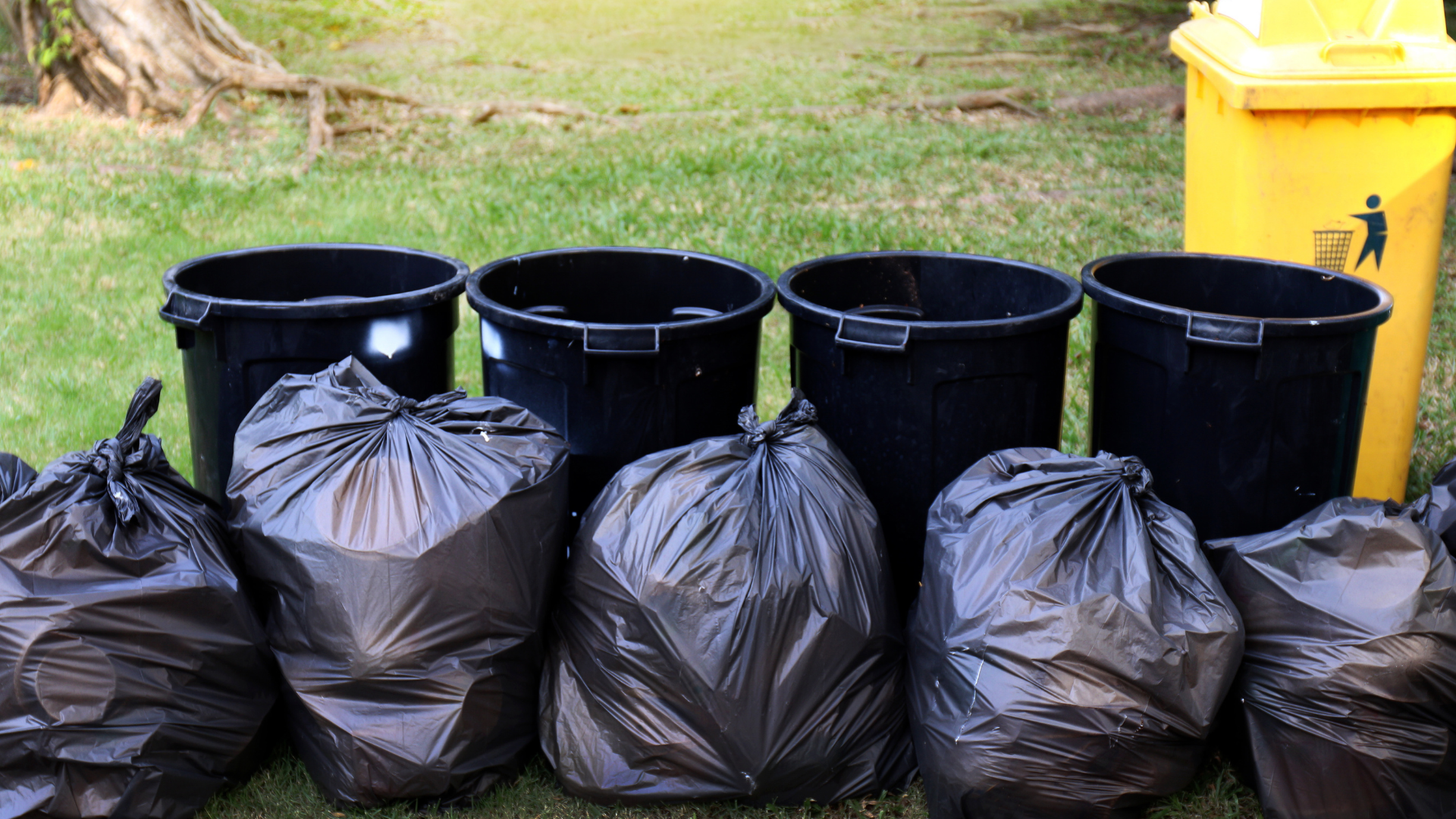
The most common mistake is buying bags by guesswork. Check the capacity of each type of bin you use, usually printed on the bin or in its spec sheet, and buy a bag rated for the same capacity or slightly more.
A good fit has two parts:
- Width: the open bag should reach around the full rim of the bin without stretching.
- Length: the bag should reach the bottom of the bin and still fold over the rim, so it does not slide in when it fills.
If you have several bin sizes, list them before ordering. Most commercial sites need only two or three bag sizes to cover every bin.
Common capacities for commercial use
Larger commercial bags are usually sold by gallon capacity:
| Capacity | Typical bins and uses |
|---|---|
| 39 gallon | Large kitchen bins, back-of-house waste, outdoor cans |
| 46 gallon | Heavy-duty collection in kitchens, warehouses and facilities |
| 55 gallon | Drums and large-volume containers, industrial and high-capacity waste |
Smaller office and restroom bins use smaller bags, but for kitchens, loading docks and facilities, the 39 to 55 gallon range does most of the work.
Black or clear?
- Black bags hide their contents and are the usual choice for general waste.
- Clear bags let staff and haulers see what is inside. They are common for recycling streams and in places where security staff need to check contents.
Some facilities use both: black for general waste and clear for recycling, so the two streams are easy to tell apart.
How heavy a bag do you need?
Bag strength depends on the film and its thickness, and suppliers describe it in different ways: by thickness, by weight per case or simply as “heavy duty.” Compare like for like within one supplier’s range. As a rule:
- Light loads such as paper and packaging waste can use standard bags.
- Wet or heavy waste from kitchens, and anything with sharp edges such as broken crates or metal scraps, needs heavier-duty bags.
- Industrial waste and full 55 gallon drums need the heaviest bags in the range.
If staff often double-bag, that usually means the bag is too light for the job. One heavier bag is easier to handle than two light ones.
Scented bags and odor control
Scented bags can help where bins sit indoors or in warm areas between pickups. They do not replace regular bin cleaning or frequent emptying, but they can make waste areas more pleasant for staff and customers.
Planning bulk trash bag orders
- Track usage by bin type for a few weeks. It tells you how many bags of each size you really use.
- Order by the case. Commercial bags are packed by the case or box, which makes counting and storing simpler.
- Keep one week of buffer. Running out of bags is a daily problem that is easy to avoid.
- Store cases off the floor in a dry place, away from heat.
Trash bags in bulk from Galaxy
Galaxy supplies commercial garbage bags in bulk in 39, 46 and 55 gallon sizes, in black and clear, including heavy-duty XXXL bags and a 55 gallon bag with mint aroma for odor control. Bags are packed 50, 60 or 100 per case or box depending on the item. See the full range on our bulk trash bags page or browse our wholesale plastic products.
Frequently asked questions
What size trash bag fits a 55 gallon drum?
A bag rated for 55 gallons. Check that the bag is long enough to fold over the rim.
When should I use clear trash bags?
Use clear bags when contents need to be visible, such as recycling or where waste is inspected.
Why do my trash bags keep tearing?
The bag is usually too light for the load, or sharp items are puncturing it. Move up to a heavier-duty bag for that bin.