


Disposable aluminum pans are the workhorse of catering, buffets and large takeout orders. They go from oven to chafing dish to client table, and they spare staff from washing heavy hotel pans after every event. Choosing the right size, however, can be confusing: full, half, third, shallow, deep and medium all mean slightly different things depending on the supplier. This guide explains how aluminum pan sizes work and how to plan portions with them.
Why pan sizes follow the steam table
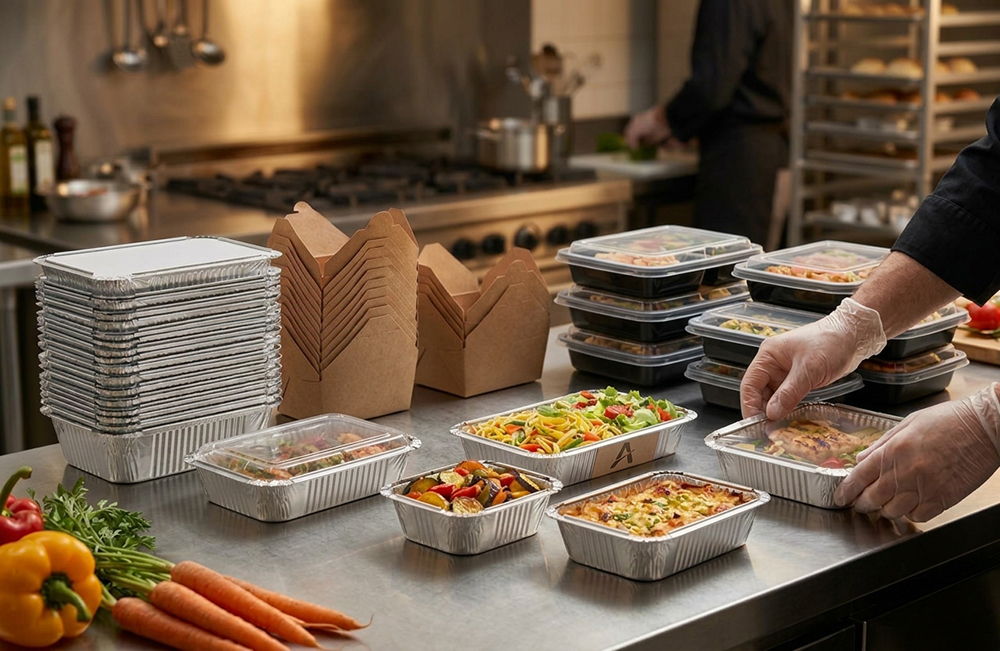
Most disposable aluminum pans are designed to fit the same openings as standard steam table and chafing dish frames. That is why sizes are described as fractions of a full-size pan. A full-size opening can hold one full pan, two half pans or three third pans side by side. This modular system lets caterers mix dishes in one chafing frame and swap pans without changing equipment.
The main sizes
| Size | Approximate top dimensions | How many fit a full-size opening | Typical uses |
|---|---|---|---|
| Full size | About 21″ × 13″ | 1 | Large catering trays, roasted meats, lasagna, sheet cakes |
| Half size | About 13″ × 10″ | 2 | Sides, pasta, vegetables, smaller groups and takeout family meals |
| Third size | About 13″ × 7″ | 3 | Sauces, toppings, smaller sides and mixed buffet layouts |
Dimensions vary slightly by manufacturer, so always check the exact product specification against your chafing frames and ovens before ordering in bulk.
Shallow, medium and deep pans
Each size usually comes in several depths. The depth affects how much food the pan holds and what it is suited for:
- Shallow pans: best for items served in a single layer, such as roasted vegetables, chicken pieces, baked goods and desserts. Food heats evenly and looks better spread out.
- Medium pans: a general-purpose depth for casseroles, pasta and rice dishes.
- Deep pans: best for saucy dishes, stews, beans, mashed potatoes and anything that needs more volume in the same footprint.
Deeper pans hold more but take longer to heat through, which matters when you are reheating on site.
Planning portions
Portion planning depends on the dish, portion size and how many other items are on the menu. Rather than relying on general rules, use a simple method:
- Fill a pan with the dish as you will serve it.
- Portion it out using your standard serving spoon or scoop and count the servings.
- Record the result for that dish and pan size in a planning sheet.
- Use the sheet to calculate how many pans each event needs, adding a buffer for larger appetites or extra guests.
After a few events, your planning sheet becomes the fastest and most accurate way to quote and prepare.
Lids and covers
Lids keep food hot, prevent spills during transport and make pans stackable in vans. When choosing lids, check that:
- The lid matches the exact pan size and rim design
- The lid material suits the job: foil-laminated board lids retain heat and can be written on, while clear plastic lids let clients see the food but should not go in the oven
- Lids seal well enough for transport without being hard to remove at the buffet
When food goes back into the oven, foil works well as a cover because it handles oven temperatures.
Handling and strength
Disposable aluminum pans are thin, so heavy dishes can bend them when lifted from one side. A few simple practices prevent spills:
- Carry full pans with two hands or on a sheet tray
- Use heavier-gauge pans for dense dishes such as lasagna or roasts
- Double up two pans for very heavy loads when heavier pans are not available
- Support the base when moving pans in and out of the oven
Oven, steam table and storage
Aluminum pans conduct heat well, so food heats evenly in ovens and stays warm in chafing frames. They can also go into freezers, which makes them useful for preparing dishes ahead of an event. Because aluminum can react with very acidic foods over long periods, avoid storing tomato-heavy or vinegar-based dishes in uncoated pans for extended times.
Aluminum pans for takeout family meals
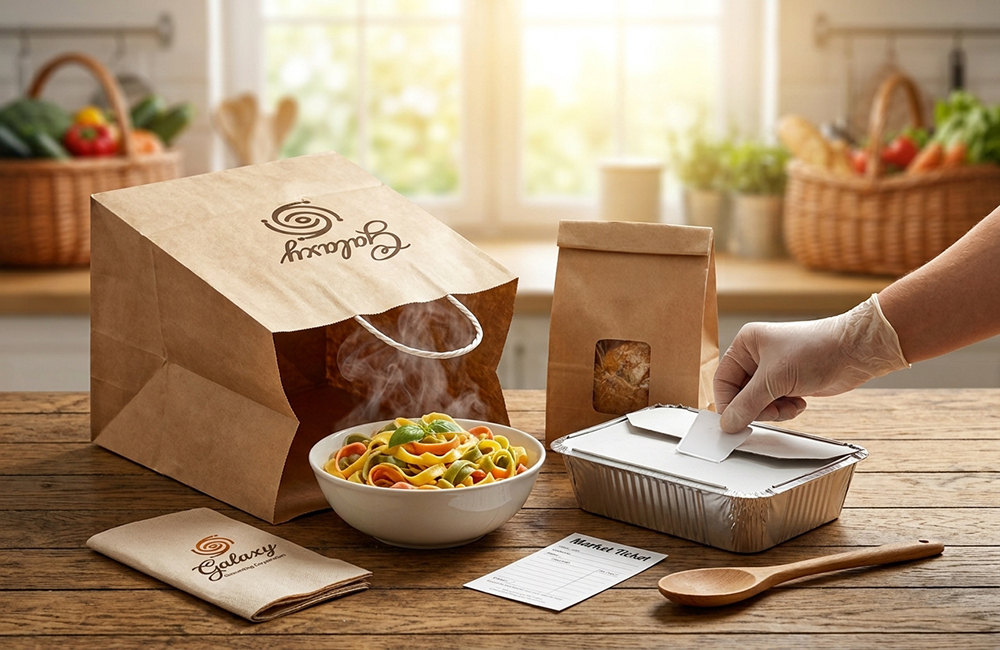
Many restaurants now sell family meals and party trays for pickup and delivery. Half-size pans are the most popular choice here: they fit on a car seat or in a delivery bag, hold enough for a family, and look generous when opened. For these orders, pair each pan with a secure lid, add a label with the dish name and reheating instructions, and place pans flat in a sturdy carrier or box. A third-size pan works well for sauces, dressings or desserts that accompany the main tray.
Because family meals are often reheated at home, include clear instructions such as removing plastic lids before oven reheating. Small details like these reduce customer questions and protect your reputation.
Building a simple pan range
Most caterers do not need every size and depth. A common setup is:
- Full-size deep pans for mains and large batches
- Half-size deep and shallow pans for sides and smaller groups
- Third-size pans for sauces, toppings and specialty items
- Matching lids for each pan you stock
Keeping the range focused reduces storage space and makes it easier to reorder by the case. You can see our aluminum options on the aluminum pans product page and the wider range on our aluminum products page.
Frequently asked questions
Do half-size pans fit in a full-size chafing dish?
Yes. Two half-size pans fit side by side in a standard full-size frame, which lets you serve two dishes from one chafing dish.
Can aluminum pans go from freezer to oven?
Aluminum pans are commonly used this way. Allow for longer heating time, and follow your food safety plan for reheating temperatures.
Should I choose deep or shallow pans for catering?
Choose shallow pans for dishes served in one layer and deep pans for saucy or high-volume dishes. Many caterers stock both in the half size because it is the most flexible.
Final thoughts
Aluminum pan sizes follow the steam table system: full, half and third pans fit the same frames in different combinations. Choose depths based on the dish, plan portions with your own tested numbers, match lids to every pan, and keep the range simple. With a well-planned pan setup, catering prep, transport and service all run more smoothly.