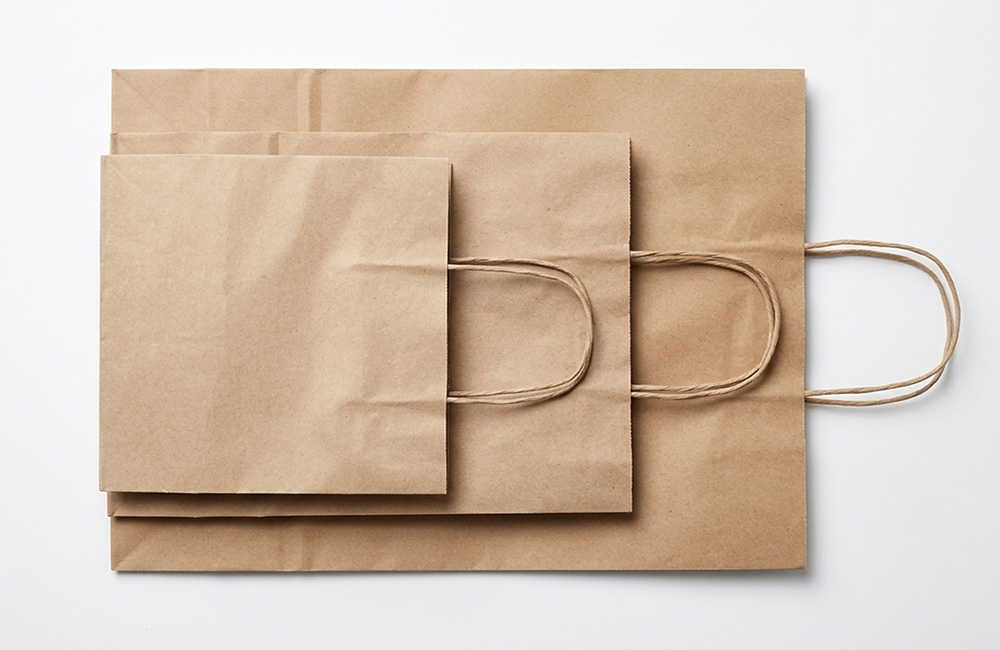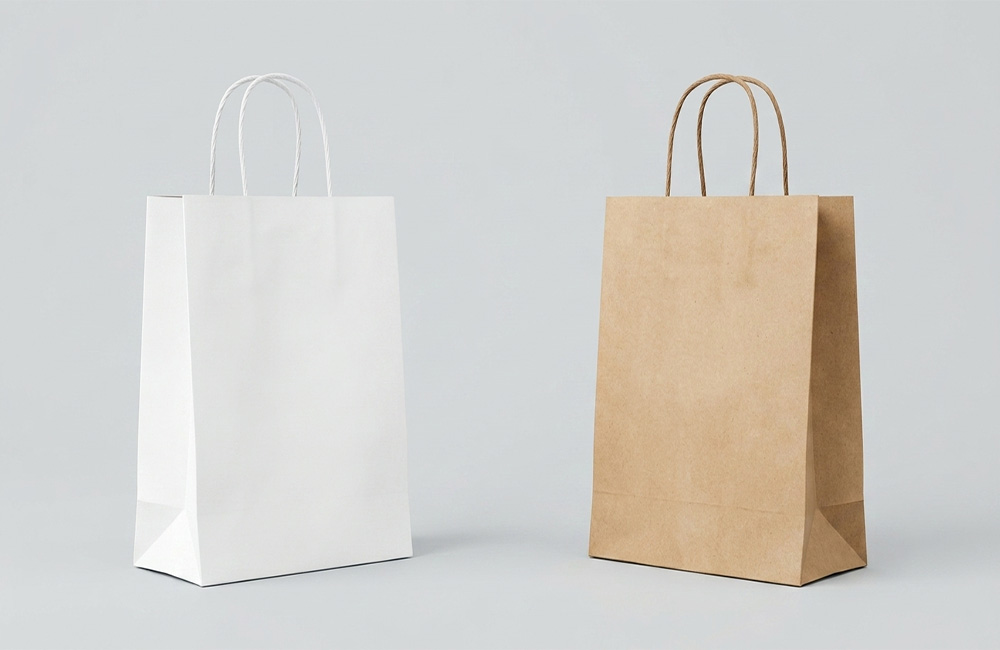



Choosing the right type of paper bag is an important decision for businesses that rely on packaging for both functionality and branding. While paper bags may seem like a simple commodity, the handle type can significantly impact customer experience, cost efficiency, and brand perception.
Among the most commonly used options in retail and food service industries are flat handle paper bags and twisted handle paper bags. Each offers unique advantages depending on how and where they are used. Understanding the differences between these two options helps businesses make more strategic packaging decisions.
What Are Flat Handle Paper Bags?
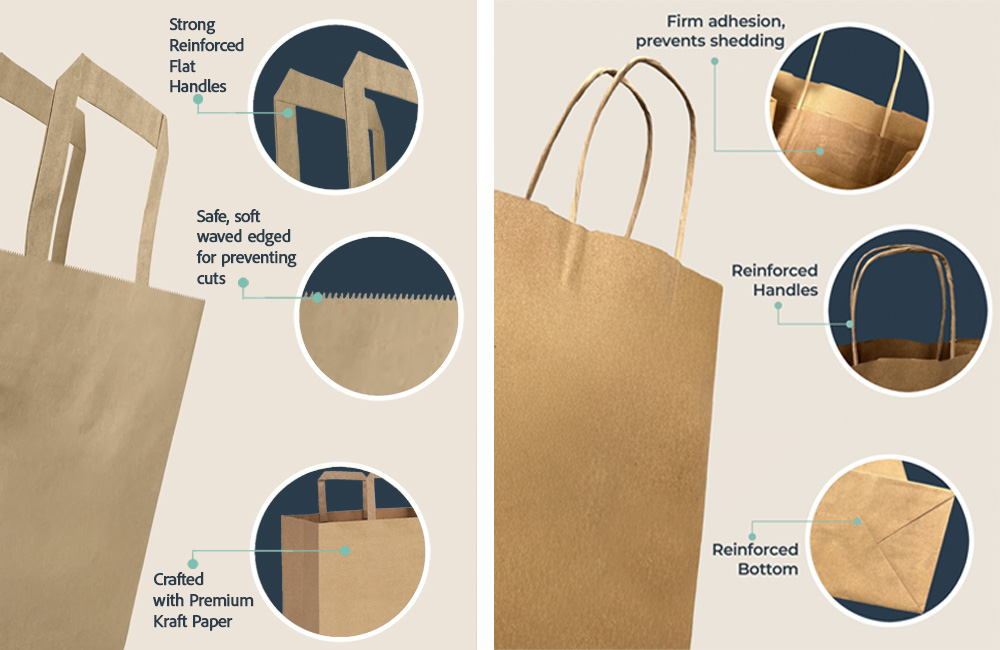
Flat handle paper bags are designed with handles made from flat paper strips that are glued to the inside of the bag. These handles are typically made from the same kraft paper material as the bag itself, creating a simple and uniform appearance.
Flat handle bags are widely used in grocery stores, takeaway food services, and fast-moving retail environments. Their structure allows them to be stacked efficiently, making them ideal for high-volume operations.
One of their biggest advantages is cost efficiency. Flat handle paper bags are generally more affordable than twisted handle alternatives, especially when ordered in bulk. This makes them a practical choice for businesses focused on reducing packaging costs without compromising functionality.
What Are Twisted Handle Paper Bags?
Twisted handle paper bags feature handles made from twisted paper cords that are attached to the inside of the bag. These handles are stronger and more flexible, providing better grip and durability.
Twisted handle bags are commonly used in retail stores, boutiques, and branded packaging applications. Their design offers a more premium look, making them suitable for businesses that want to enhance their brand image.
In addition to aesthetics, twisted handles provide better weight distribution, allowing the bag to carry heavier items comfortably. This makes them a preferred choice for clothing stores, gift shops, and specialty retailers.
Key Differences Between Flat and Twisted Handle Paper Bags
The main differences between flat handle and twisted handle paper bags come down to cost, durability, and presentation.
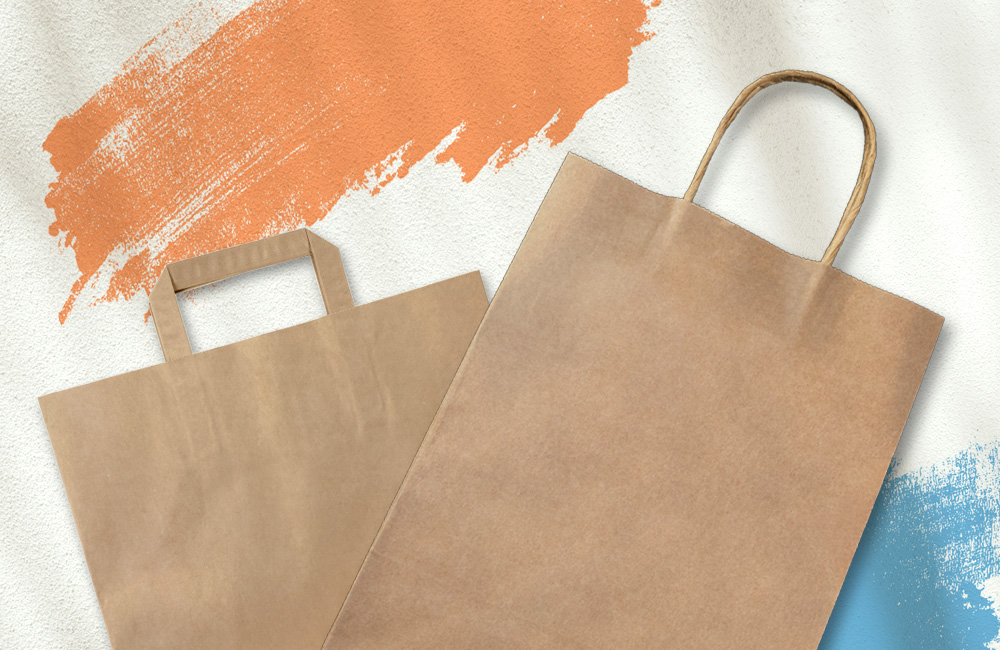
Flat handle bags are more economical and efficient for high-volume use. They are easy to store, quick to distribute, and suitable for businesses that prioritize functionality over aesthetics.
Twisted handle bags, on the other hand, offer a stronger and more visually appealing solution. They are better suited for branding and customer-facing environments where packaging plays a role in the overall shopping experience.
Another important factor is comfort. Twisted handles are easier to carry over longer periods, especially when the bag contains heavier products. Flat handles, while functional, may not provide the same level of comfort.
Cost Comparison: Which Option Is More Budget-Friendly?
For businesses operating at scale, cost is a critical factor in packaging decisions. Flat handle paper bags are generally more cost-effective due to their simpler production process and material usage.
They are ideal for supermarkets, food delivery services, and businesses that require large quantities of bags on a daily basis. Lower unit cost combined with efficient storage makes them a practical choice for operational efficiency.
Twisted handle bags typically come at a higher price point. However, the added cost can be justified by their durability and branding potential. Businesses that view packaging as part of their marketing strategy often see twisted handle bags as an investment rather than an expense.
Branding and Customer Experience
Packaging plays a key role in how customers perceive a brand. Twisted handle paper bags provide a more premium look and feel, which can enhance the overall customer experience.
Retailers often use these bags as an extension of their branding. Custom printing, logo placement, and color options allow businesses to create a strong visual identity. Customers are also more likely to reuse high-quality bags, increasing brand visibility over time.
Flat handle bags, while simpler in design, can still be customized effectively. They are often used in industries where speed and efficiency are more important than presentation, such as food service and grocery retail.
Best Use Cases for Each Type
Flat handle paper bags are best suited for:
- Grocery stores
- Takeaway food businesses
- High-volume retail operations
- Cost-sensitive packaging needs
Twisted handle paper bags are ideal for:
- Fashion and apparel stores
- Gift shops and boutiques
- Premium retail brands
- Promotional and branded packaging
Choosing the right option depends on your business model and customer expectations. Companies focused on efficiency may prefer flat handle bags, while those prioritizing branding may lean toward twisted handle designs.
Durability and Load Capacity
Durability is another important consideration when comparing these two types of paper bags. Twisted handle bags generally offer higher load capacity due to their reinforced handle structure.
They are better suited for carrying heavier items and provide more comfort during transport. This makes them a reliable option for retail environments where customers may carry purchases over longer distances.
Flat handle bags, while durable enough for everyday use, are more suitable for lighter loads. Their design is optimized for convenience rather than maximum strength.
Sustainability Considerations
Both flat handle and twisted handle paper bags are typically made from recyclable materials, making them suitable for businesses looking to adopt more sustainable packaging solutions.
Flat handle bags often use less material, which can result in a lower environmental footprint during production. Twisted handle bags, while slightly more resource-intensive, offer longer usability due to their durability.
For businesses, the key is balancing sustainability with functionality. Choosing the right type of paper bag can help reduce waste while maintaining operational efficiency.
How to Choose the Right Paper Bag for Your Business
Selecting between flat handle and twisted handle paper bags depends on several factors:
- Budget and cost constraints
- Type of products being packaged
- Brand positioning and customer expectations
- Usage frequency and volume
Businesses should evaluate their packaging needs from both an operational and marketing perspective. In many cases, companies use both types of bags for different purposes, optimizing cost and branding simultaneously.
Flat handle vs twisted handle paper bags is not just a comparison of design—it’s a strategic decision that affects cost, branding, and customer experience. Each option serves a specific purpose, and the right choice depends on how your business operates.
Flat handle bags offer efficiency and affordability, making them ideal for high-volume use. Twisted handle bags provide durability and a premium feel, making them better suited for branding and customer engagement.
By understanding the strengths of each option, businesses can choose packaging solutions that align with their goals and deliver long-term value.