


Disposable gloves are one of the most frequently used items in any food service operation. Staff change them dozens of times per shift, and the wrong glove can slow work down, tear at the worst moment or create food safety and allergy concerns. This guide explains how to choose disposable gloves for food service: the main materials, how to get sizing right, what documentation to ask for and how to plan quantities.
Why gloves matter in food service
Gloves create a barrier between hands and food. The FDA Food Code, which many state and local health departments adopt, generally prohibits bare-hand contact with ready-to-eat food. Gloves are one of the most common ways kitchens meet that requirement, along with utensils, deli tissue and similar tools. Gloves do not replace handwashing: hands should be washed before putting gloves on and whenever gloves are changed after contamination.
Comparing glove materials
| Material | Strengths | Typical food service uses |
|---|---|---|
| Nitrile | Strong, puncture resistant, good fit and dexterity, latex-free | Food prep, handling raw meat, tasks with sharp or rough items, longer tasks |
| Vinyl | Looser fit, easy to put on and remove, latex-free | Short, light tasks such as assembling sandwiches |
| Polyethylene (poly) | Very loose, quick to change | Very short tasks such as handling a single item at a counter |
| Latex | Elastic, comfortable fit | Use is limited because of allergy concerns |
Nitrile
Nitrile gloves are the most versatile choice for kitchens. They fit closely, resist punctures and tears better than vinyl or poly, and stand up to oils and fats well. That makes them suitable for raw meat, cutting and longer prep tasks. Because they are latex-free, they also avoid latex allergy concerns.
Vinyl and poly
Vinyl and poly gloves are looser and less durable, but they are quick to change. They can work for brief, low-risk tasks, but they are more likely to tear during heavy work.
A note on latex
Latex allergies can affect both staff and customers, and some states restrict the use of latex gloves in food service. Many operators choose latex-free gloves across all stations to avoid the issue entirely.
Getting the size right
Size has a direct effect on safety and comfort. Gloves that are too small tear easily and tire the hands. Gloves that are too large slip, bunch up and make it harder to handle food precisely.
- Offer at least two sizes, because staff hands vary.
- Ask staff to try samples before you standardize.
- Store sizes clearly labeled at each station so staff can grab the correct box quickly.
Our food service gloves include nitrile gloves in medium and large sizes.
Food-contact documentation
Gloves that touch food are food-contact items. When choosing a supplier, ask:
- Are these gloves intended for food handling?
- What documentation supports food-contact suitability?
- Are they powder-free? Powder-free gloves are standard in food service because powder can transfer to food.
Keep the documentation with your food safety records so it is easy to show during inspections or client audits.
When to change gloves
Gloves only protect food when they are changed at the right moments. Common triggers include:
- Switching between raw and ready-to-eat food
- After handling raw meat, poultry or seafood
- When a glove is torn or damaged
- After touching the face, hair, phone, money or other non-food surfaces
- After taking out trash or cleaning
- When changing tasks or after a break
Post a simple glove-change reminder at each prep station. Clear, visible rules are easier to follow during a rush than rules remembered from training.
Color coding and allergen control
Some kitchens use different glove colors for different tasks, for example one color for raw protein and another for ready-to-eat food. Color coding makes it easier for supervisors to see at a glance whether the right gloves are being used at each station. It can also support allergen control: staff preparing an allergen-free order can change into a distinct glove color, which signals to others that the order needs separate handling. If you adopt color coding, keep the system simple, post it at each station and include it in onboarding.
Training new staff
Glove habits form quickly, so it pays to train them on the first day. Show new staff how to put gloves on and remove them without touching the outside, where glove boxes are kept, and the situations that require a change. A short demonstration is more effective than a written policy alone.
Planning case quantities
Glove use varies widely between operations, so the best estimate comes from your own data:
- Count how many gloves one station uses during a typical shift.
- Multiply by the number of stations and shifts per week.
- Add extra for busy days, new staff and unexpected tasks.
- Convert the weekly total into boxes and cases, and set a reorder point.
Running out of gloves can stop service, so keep a buffer stock and track usage for a few weeks before setting a regular order.
Storage
Store glove boxes in a cool, dry place away from direct sunlight and heat sources, which can weaken the material. Keep open boxes away from splashes and raw food areas, and use glove dispensers or wall mounts to keep boxes clean and accessible.
Frequently asked questions
Are nitrile gloves better than vinyl for food service?
For most prep tasks, nitrile gloves offer better fit, strength and puncture resistance. Vinyl can be suitable for short, light tasks. Many kitchens use nitrile as the standard and limit other materials to specific stations.
Do gloves replace handwashing?
No. Hands should be washed before putting on gloves and whenever gloves are changed after contamination.
What color gloves should a kitchen use?
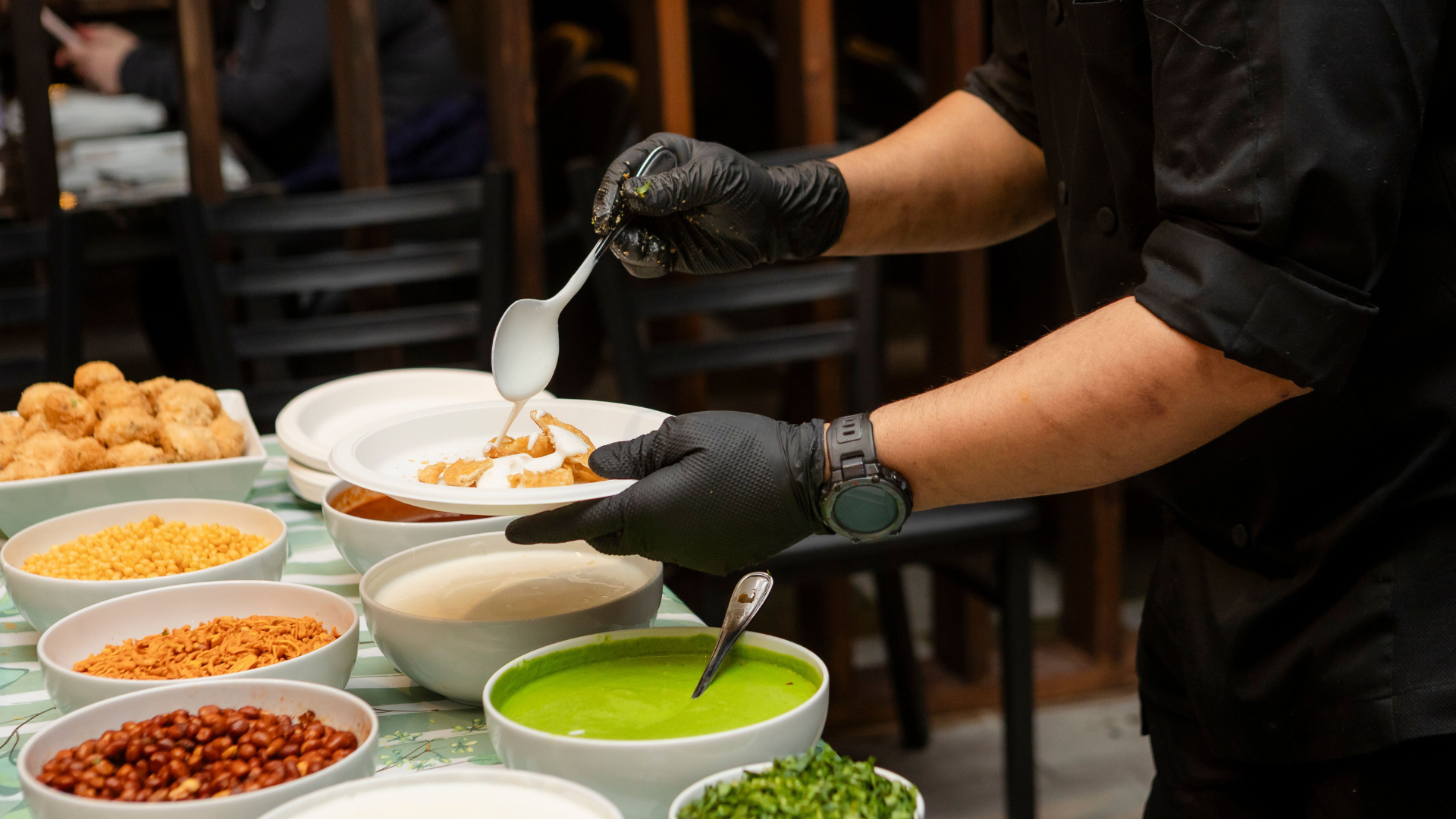
Many kitchens choose blue or black gloves because they stand out against most foods, making a torn piece easier to spot.
Final thoughts
The right disposable gloves support food safety, comfort and speed. Choose latex-free materials suited to each task, offer the right sizes, ask for food-contact documentation, post clear glove-change rules and plan quantities from real usage. You can find gloves alongside other plastic food service supplies on our wholesale plastic products page.