
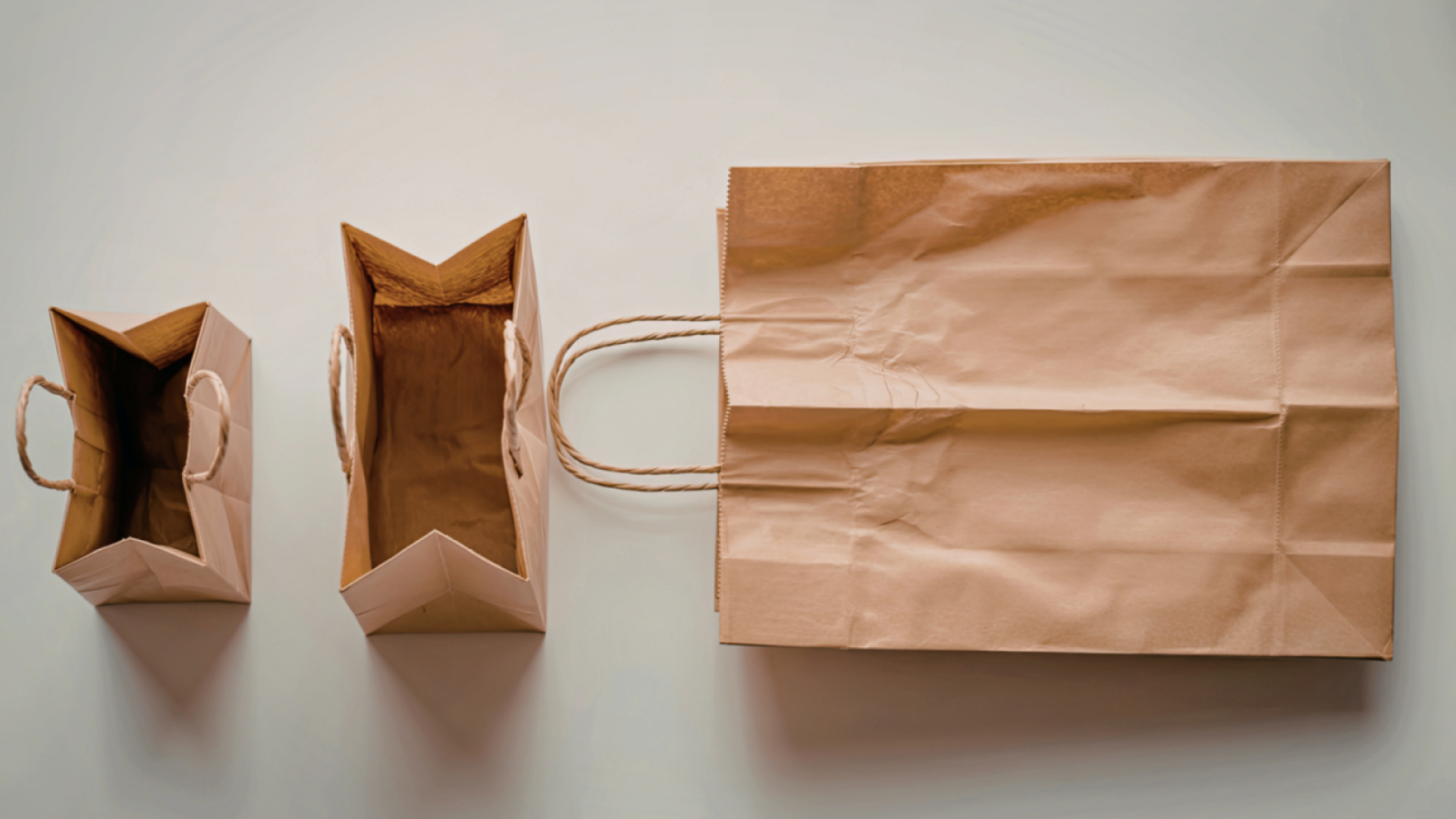

SOS paper bags are among the most widely used bags in food service and retail. You see them as lunch bags, takeout bags, bakery bags and grocery bags, often without knowing they have a specific name. This guide explains what SOS bags are, how their sizes and paper weights are described, and how to choose the right ones for your business.
What does SOS mean?
SOS stands for “self-opening sack” (sometimes written as “self-opening square”). The bag has a flat, rectangular bottom that is folded and glued so that, when the bag is opened with a quick shake, it stands upright on its own. That simple feature is the reason SOS bags are so popular: staff can open a bag, set it on the counter and fill it with both hands.
SOS bags usually have pleated, or gusseted, sides that fold flat for storage and expand when the bag is opened. Most have no handles, although some versions are made with handles for retail use.
How SOS bag sizes are described
SOS bags are commonly sold by a number, such as #4, #6, #8, #12 or #20. A higher number means a larger bag. The numbers are a long-standing industry convention rather than an exact measurement, so two suppliers’ bags with the same number can differ slightly. Always compare the actual dimensions, which are usually listed as:
- Width: the front panel width
- Gusset or depth: the width of the side panel, which also sets the bottom depth
- Height: the bag’s height when standing open
As a rough guide, smaller numbers are used for snacks, pastries and single items, mid-range sizes for lunch and takeout meals, and the largest sizes for groceries and bulk orders.
What is basis weight?
Paper bag strength is often described by basis weight, written with a pound sign, such as 30#, 40# or 50#. Basis weight is the weight of a standard ream of the paper, so a higher number means a heavier, stronger paper. Some suppliers describe the same property in grams per square meter (GSM).
Lighter basis weights suit small, light items such as cookies or a sandwich. Heavier basis weights are better for larger bags carrying heavier loads, such as groceries, bottled drinks or multiple takeout containers.
For a deeper explanation of how paper weight affects strength, see our guide to paper bag GSM and strength.
Common uses of SOS bags
| Business | Typical use |
|---|---|
| Restaurants and cafés | Takeout and lunch orders, sandwiches, side items |
| Bakeries | Pastries, rolls, cookies and small breads |
| Grocery stores and markets | Checkout bags, produce and bulk goods |
| Delis and convenience stores | Sandwiches, snacks and quick purchases |
| Pharmacies and retail | Small purchases and prescriptions |
Choosing the right SOS bag
1. Start with what goes inside
Measure the items or containers you put in the bag. For takeout, place your most common container combinations side by side and check that they sit flat on the bag’s bottom. A flat, wide base keeps containers level and reduces spills.
2. Match basis weight to the load
A bag that is strong enough for a sandwich may tear under two hot entrées and a drink. Choose heavier paper for heavier or wetter loads.
3. Brown kraft or white
Natural brown kraft gives a classic, earthy look and hides handling marks. White bags show printed logos and colors more brightly and look clean in bakery and café settings.
4. Plain or printed
Printed SOS bags turn every order into brand exposure. For new businesses or seasonal menus, plain bags with a branded sticker or stamp are a flexible starting point.
5. Keep the range small
Most operations need two or three sizes. Fewer sizes mean simpler storage, faster service and easier reordering.
Hot, greasy and wet foods
Standard kraft paper absorbs grease and moisture. For fried foods, warm pastries or items with sauce, grease can show through the bag and weaken it. There are a few ways to handle this: place food in a container or wrap it in wax paper before bagging, choose a heavier basis weight, or ask your supplier whether a grease-resistant paper is available for the size you need. For bakeries, a bag with a window or a lined bag can also keep pastries visible and protect the outside of the bag.
Window and specialty SOS bags
Some SOS-style bags include a clear window panel, which lets customers see baked goods, coffee beans or snacks without opening the bag. These are especially useful for retail displays and grab-and-go shelves, where visibility helps sales.
SOS bags vs bags with handles
SOS bags are fast to fill and stand upright, which makes them ideal for counters and takeout. Bags with handles, such as twisted or flat handle bags, are easier to carry for longer distances and suit retail shopping. Many businesses use both: SOS bags for food and quick purchases, handle bags for larger retail orders. For a broader overview of sizing across bag types, read our guide to choosing the right paper bag size.
Storage tips
Store SOS bags flat in their cartons, off the floor and away from moisture and heat. Humidity can soften paper and affect how bags open. Keep a small supply at each service station so staff do not have to leave the counter during busy periods.
Frequently asked questions
Are SOS bags the same as lunch bags?
Many lunch bags are small SOS bags. “Lunch bag” describes the use, while “SOS” describes the construction with a self-opening square bottom.
Are SOS bags food safe?
SOS bags used for food should be made from materials intended for food contact. Ask your supplier for documentation, especially for bags that touch unwrapped food such as pastries.
Can SOS bags be custom printed?
Yes, SOS bags are commonly printed with logos and brand colors. Ask about minimum quantities and how long printed production takes.
Final thoughts
SOS paper bags are simple, practical and versatile. Choose sizes by measuring what goes inside, match basis weight to the load, decide between kraft and white, and keep the range small. You can see our options on the SOS bags product page and our full range of wholesale paper bags.